Our Woods
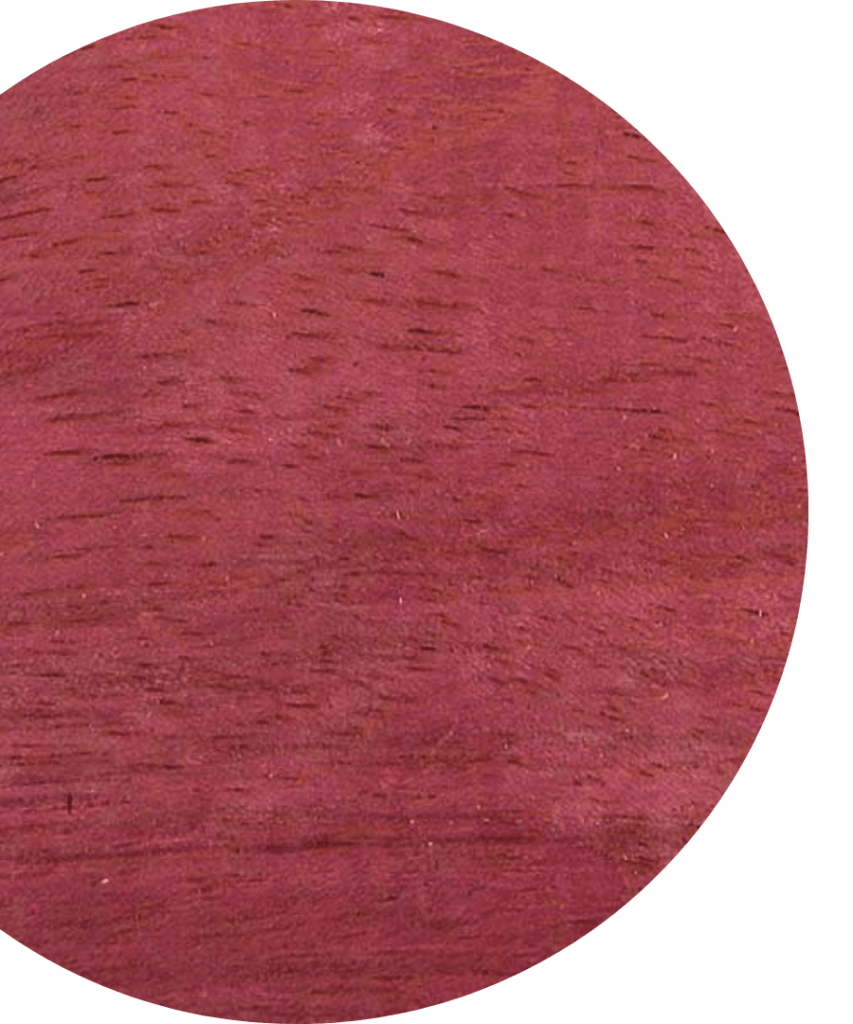
Amaranth
Amaranth wood is a precious wood of great longevity and hardness, from South American trees of the genus Peltogyne.
It is known for its vivid violet-purple colour, which darkens over time towards reddish or brownish tones through oxidation and exposure to sunlight, although this change is slow.
Amaranth can be used for many projects: floors, furniture, decorative objects, jewellery, knives…
It is also called “purpleheart”, not to be confused with violetwood.
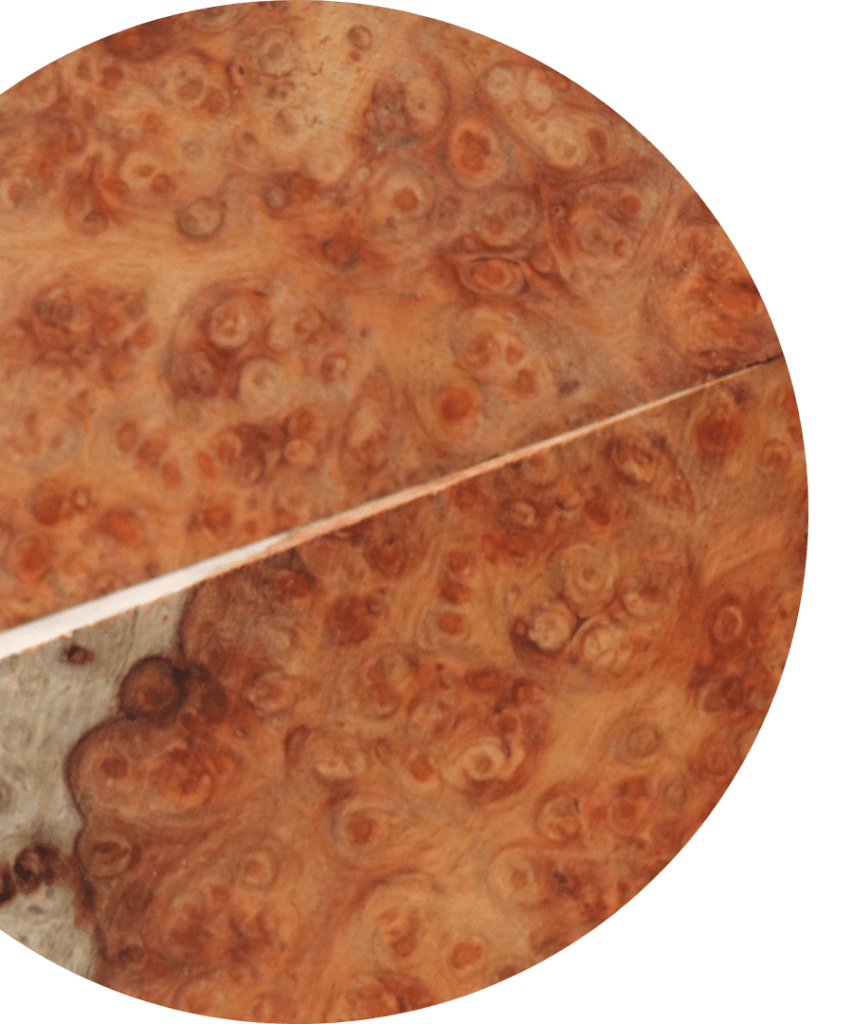
Amboine
Amboyna is a rare and prestigious wood, highly sought after, with high density and hardness.
This wood shows sublime patterns, almost like little swirls, because it comes from natural growths on the tree. Its colours can range from an intense brown to light golden browns.
Its density makes it a durable wood, suited to meticulous projects requiring great precision.
It is mainly used to make art objects, knives and, occasionally, marimba bars (a kind of xylophone).
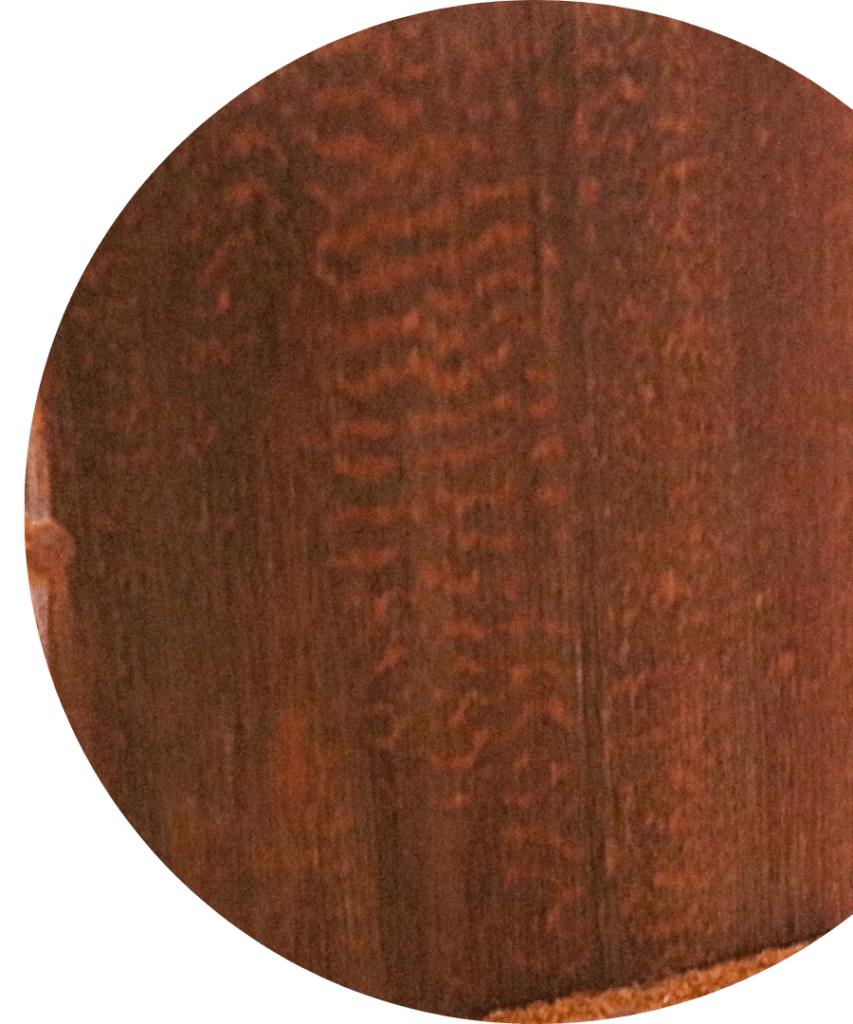
Amourette
Amourette is a very dense exotic wood from South America, also known as letterwood, which was used to make printing type.
It is renowned for its hardness, fine grain and colour nuances ranging from light brown to deep brown.
It has been used for centuries for its sophisticated appearance in making high-quality musical instruments, and in making knives and other precious objects such as pens.
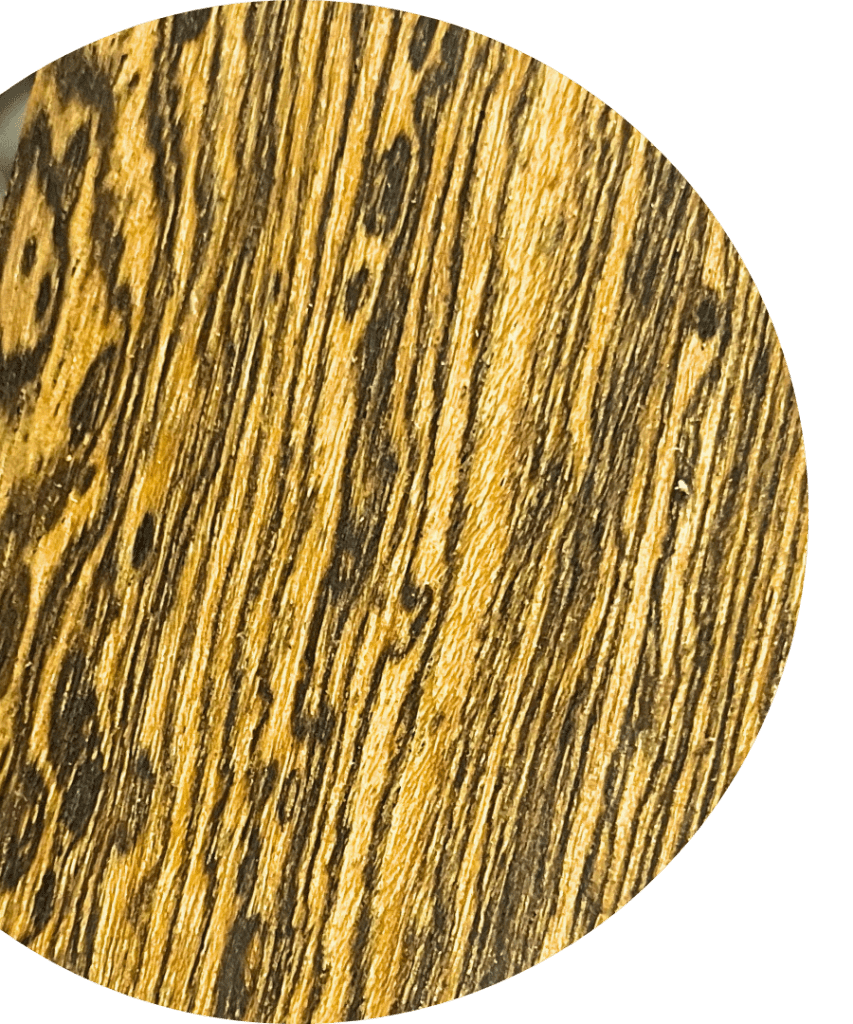
Bocote
Bocote is a South American wood of quality, durable and of medium density. It comes from a fast-growing tree that can reach 35 metres.
This wood is identifiable by its light yellow-brown colours crossed by dark brown streaks from its grain.
This wood is used in boat building, in lutherie, in cabinetmaking and in the crafting of wooden objects, including knifemaking.
Pinkwood
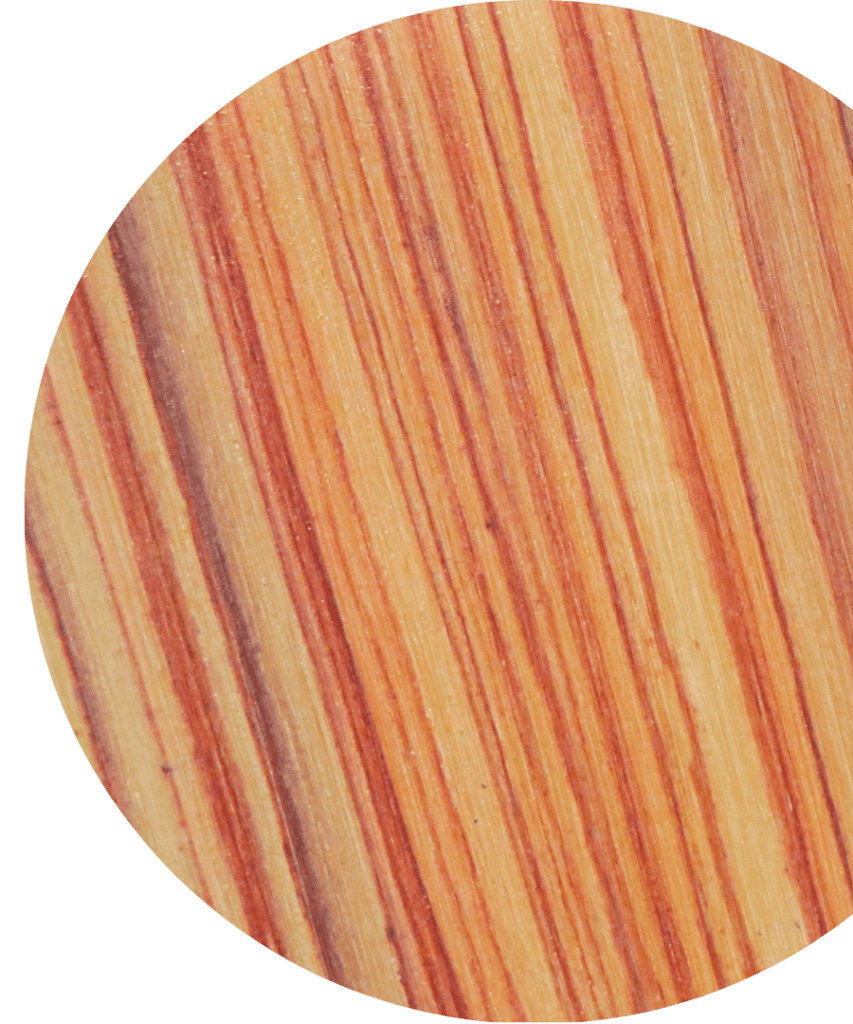
Pinkwood is a luxurious wood from trees of the genus Dalbergia, of great density and strength.
This wood is recognisable by its grain and its tones ranging from light or dark brown to a charming subtle pink, giving it a warm appearance.
It can be used in cabinetmaking, marquetry and knifemaking for its impact resistance; it is a versatile wood.
Another type of tree used in perfumery has the same nickname, although they are not from the same family.
Snakewood
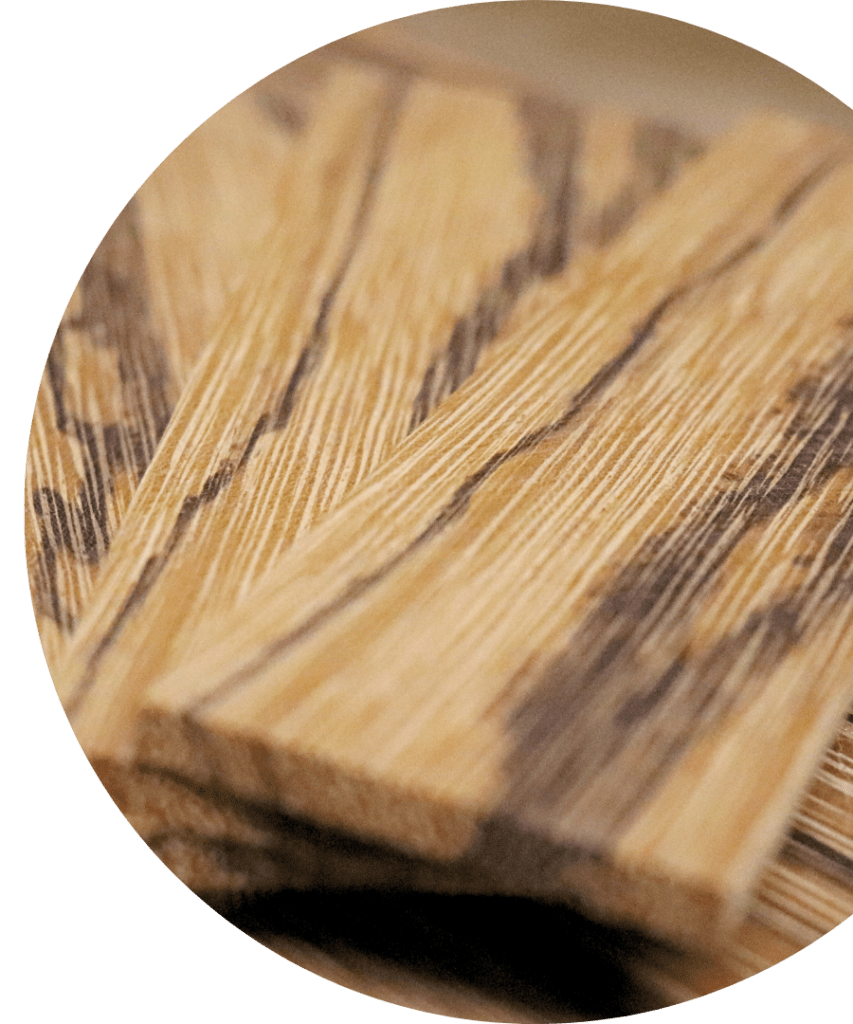
Snakewood is a precious wood of high hardness, from South America, from the forests of French Guiana.
Its appearance is unique: its contrasting colours range from light gold to deep brown and give the wood a marbled look. It is also covered with small, lighter streaks and spots reminiscent of snake scales.
This wood is widely used in knifemaking for its beauty and how well it takes a polish.
Violetwood
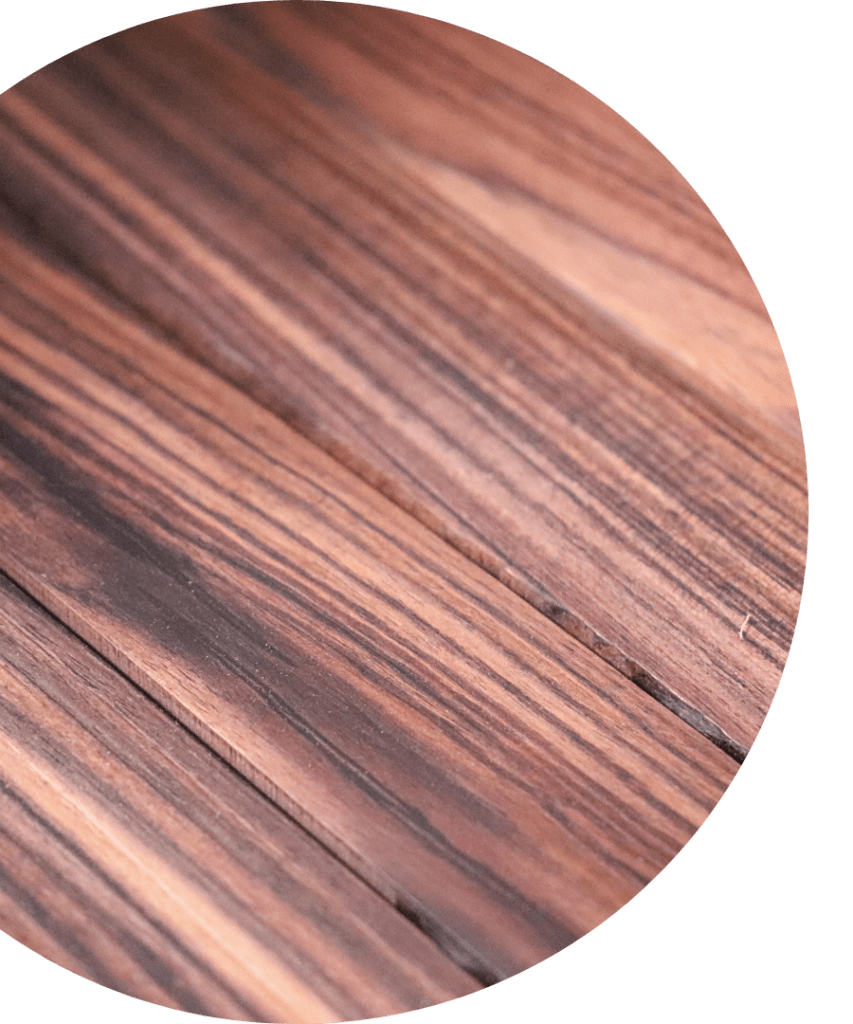
Violetwood is a very dense, precious exotic wood of the Fabaceae family, close to the rosewoods.
Its grain creates sublime contrasts, going from dark brown to purplish tones, giving the wood an almost marbled effect.
It is used by cabinetmakers, by craftspeople such as jewellers and knifemakers, and by luthiers.
It is nicknamed “kingwood” in English, as it was reserved for nobles and the aristocracy in the 17th and 18th centuries.
Karelian birch
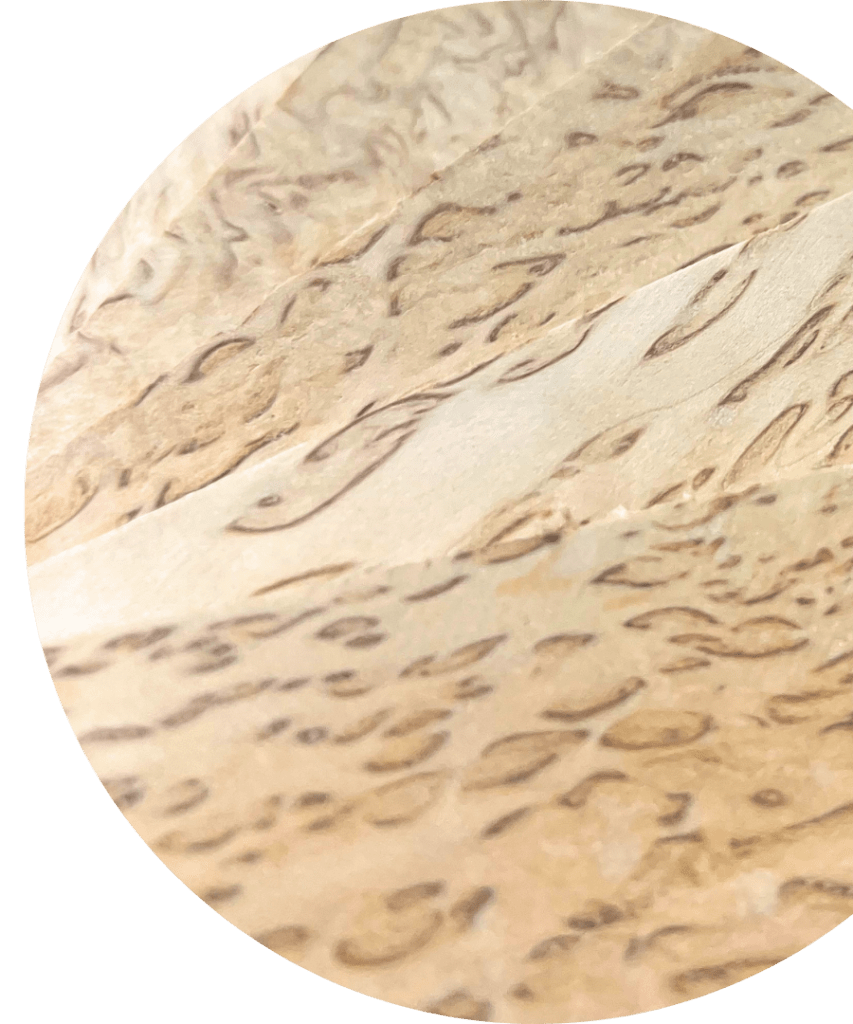
Figured birch, also called Karelian, Finnish or Norwegian birch, is a wood known for its grain patterns.
This pattern forms when the tree freezes as the sap rises in spring.
It is recognised for the high contrast between its dark veins and its light heartwood, which give it a highly sought-after unique look, almost like marble.
It is a rare and precious wood of great durability, widely used in knifemaking and cabinetmaking to create luxury pieces.
Cade wood
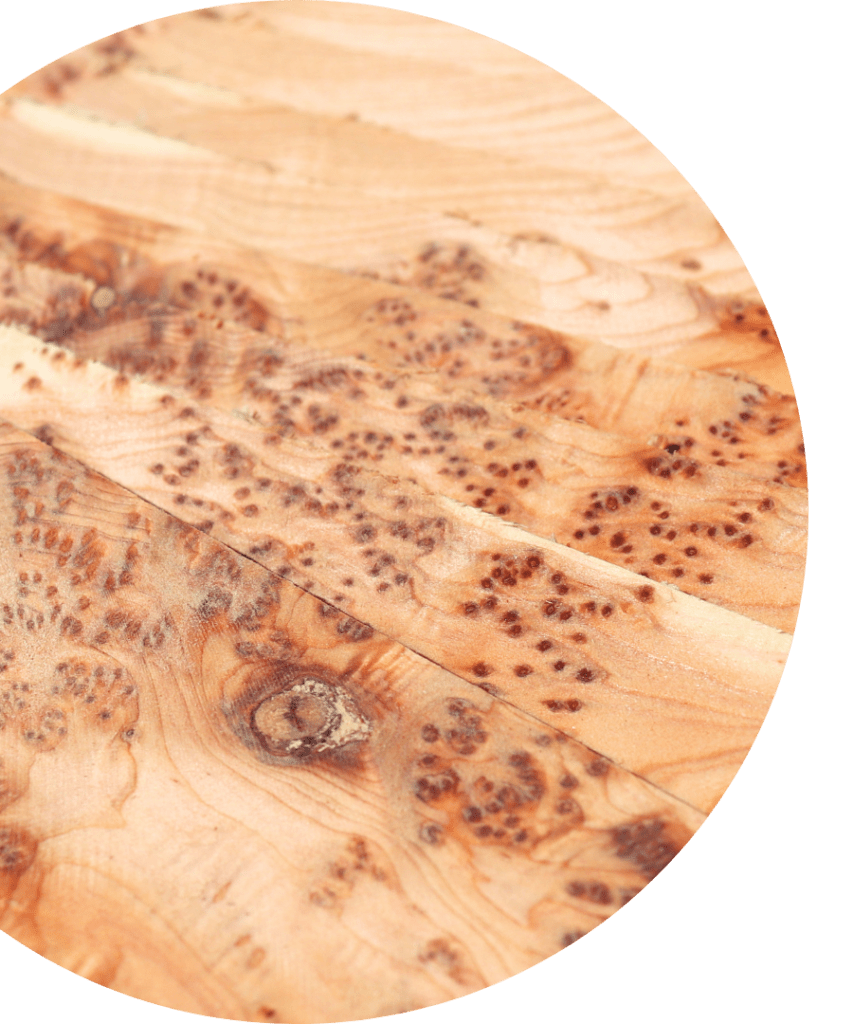
Cade burl comes from the Mediterranean coast, from a small tree of the garrigue belonging to the juniper family.
This wood is naturally fragrant, with a pleasant scent.
Generally light brown in colour, it shows a layering of small dark spots and a beautiful, subtle grain.
Cade wood is used in several forms for its many virtues: essential oil, black oil, moth repellent, incense, making art objects and cabinetmaking. It always leaves a pleasant smell in the workshop.
Oak
Oak is a very common hardwood tree, durable and very resistant to insects and fungi.
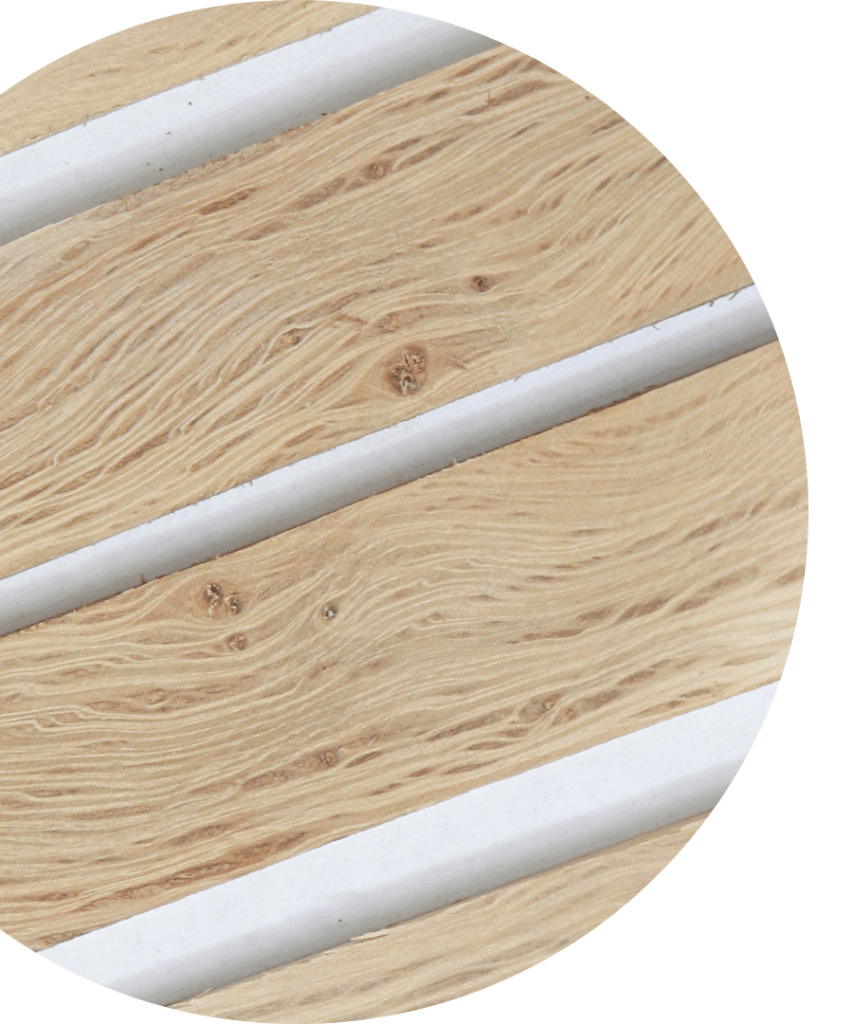
It has a light brown to dark brown appearance, with a highly variable grain that can be anything from fine to very coarse. Fine streaks run along its surface.
As it is a very common tree, it is widely used, particularly in Europe.
It is used in joinery, cabinetmaking, to make barrels and utensils, and in the construction of roof frames and
of boats.
Royal ebony
Royal ebony is a rare and precious wood of high density, with great durability and hardness.
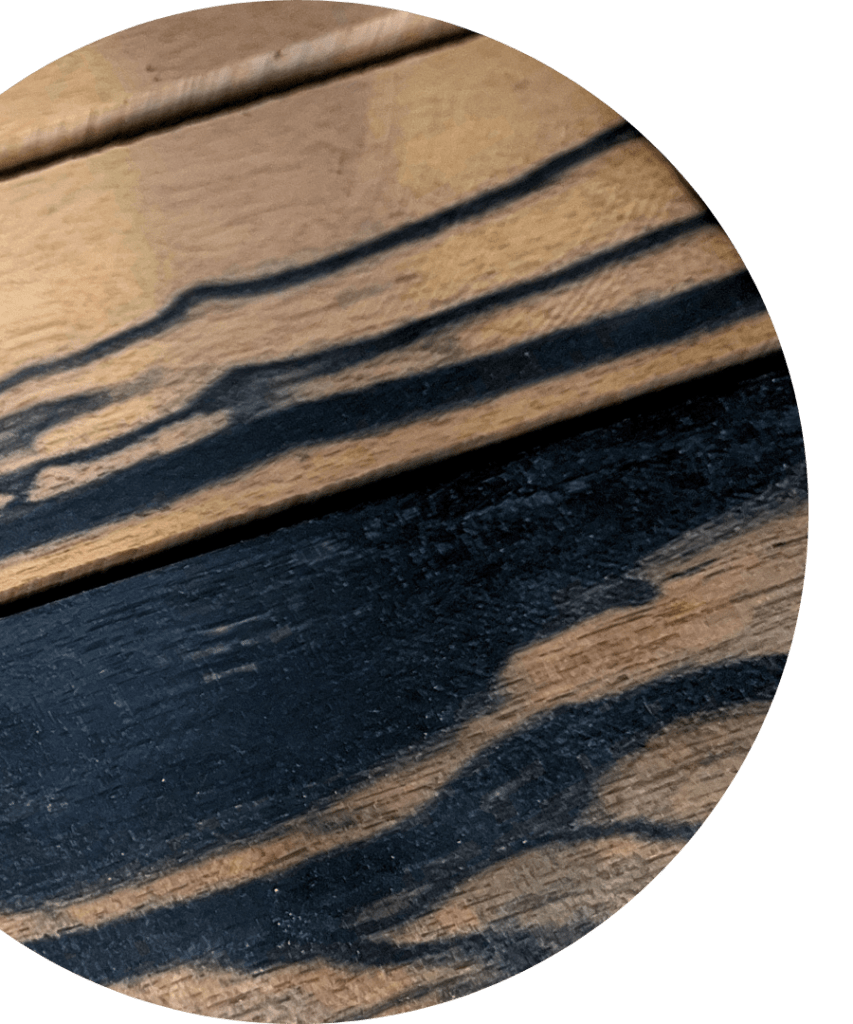
Generally coming from South-East Asia, particularly Laos, this ebony is recognisable by its highly contrasting light brown and deep black colours, which make it a unique and prestigious wood.
This material is very often reserved for exceptional pieces and for luxury craftsmanship, knifemaking and art objects.
Goyavier
Guava is an exotic wood often heat-marked and stabilised to make it denser and stronger while keeping its natural beauty.
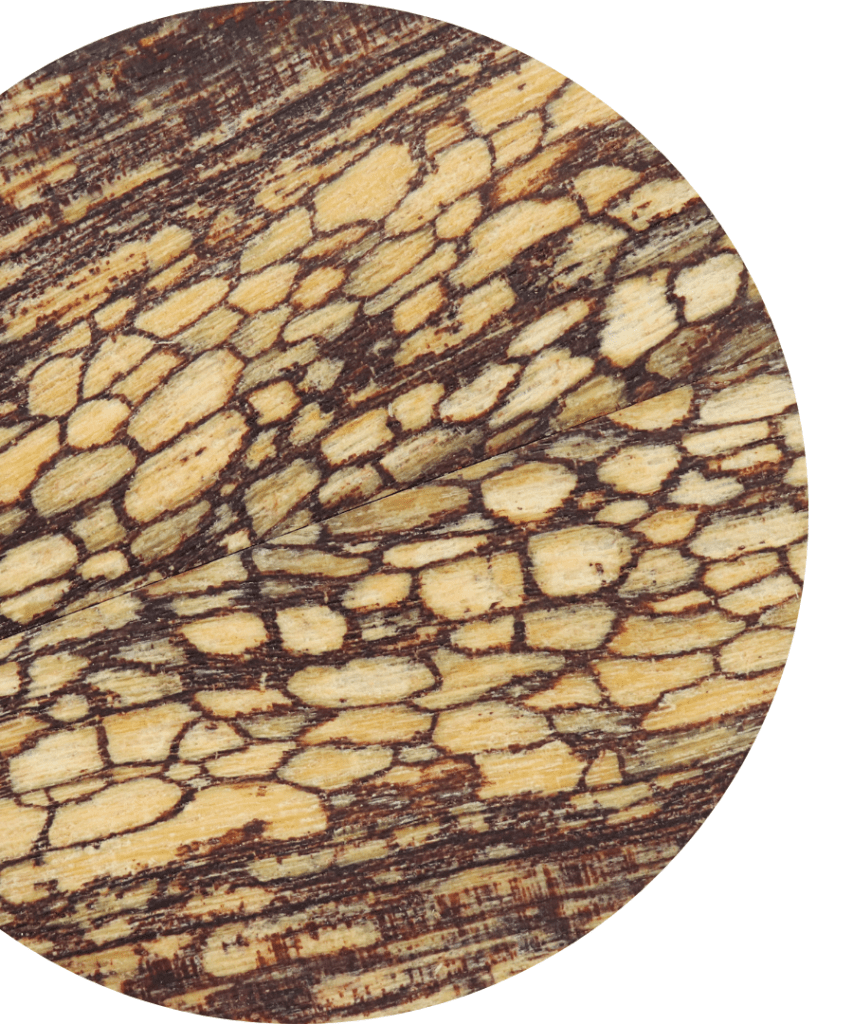
It is a wood with a unique look thanks to its contrasting grain, which reveals small light golden-brown shapes on its surface, a little like small scales.
Thanks to stabilisation, it is sturdy and resistant to moisture, making this wood a useful material in crafts, for making jewellery or knife handles.
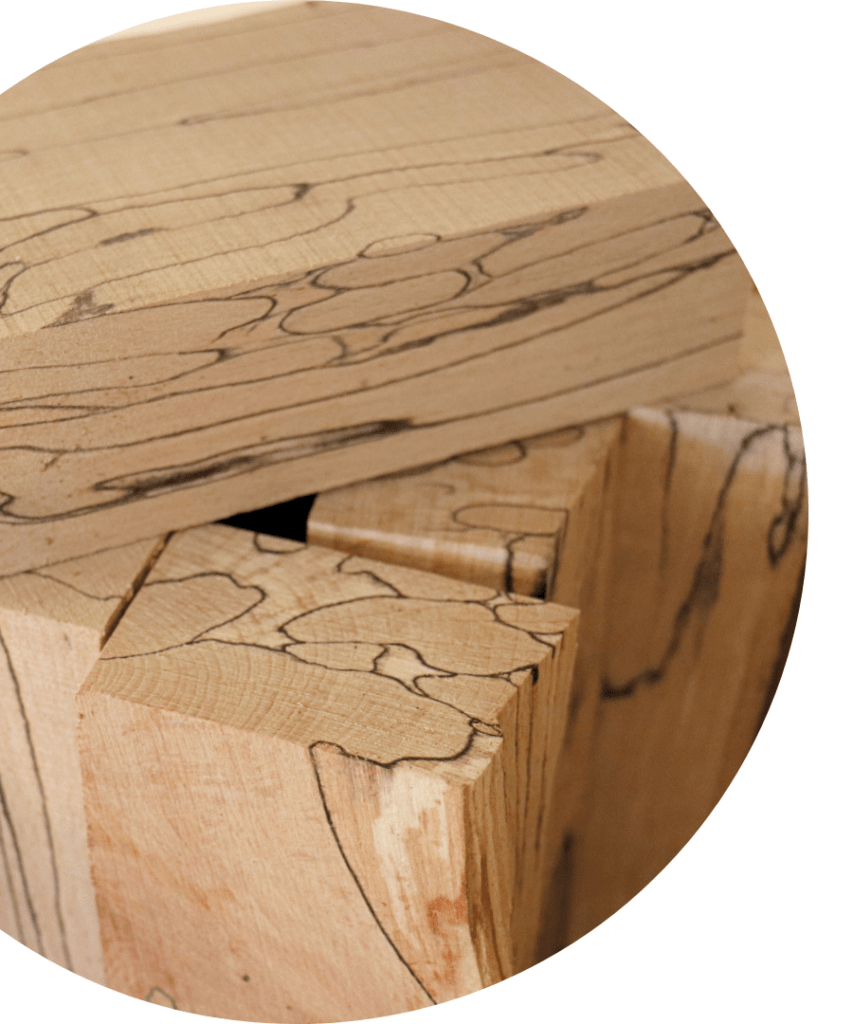
Beech
Beech is a wood from Europe with a fine grain, often heat-marked and stabilised to strengthen it, make it denser and easier to maintain.
Stabilisation does not alter its natural colours; it has a highly contrasting grain, decorating its surface with fine, almost black patterns on a bright, light, speckled brown background.
Beech wood has many uses: it can be used to make small objects and furniture, as fuel, and its fibres are used in papermaking.
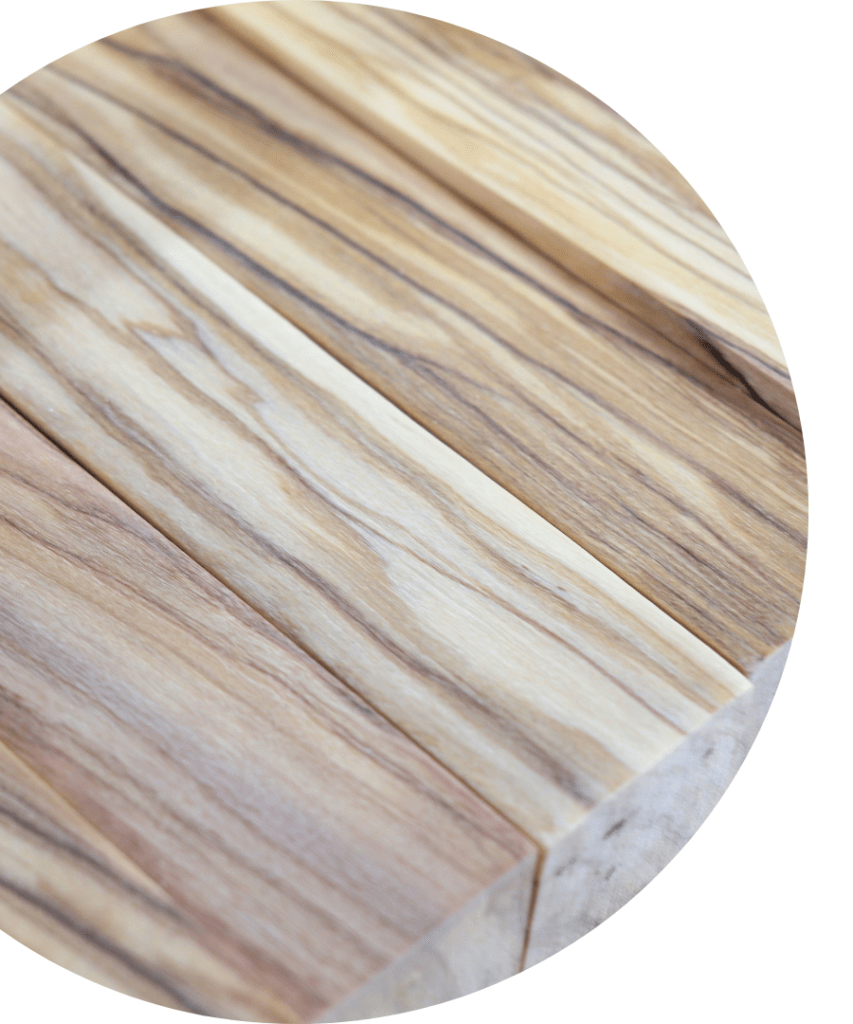
Olive wood
Olive is a noble wood, very dense, hard and resistant, renowned for its durability. It has low porosity and is therefore highly resistant to water and bacteria.
With a light golden-brown appearance, its burl is crossed by darker veins giving it a sublime marbled look.
Its hardness makes it a wood widely used in joinery, in making various utensils, in art and decorative crafts, and even as carved chew sticks for dogs.
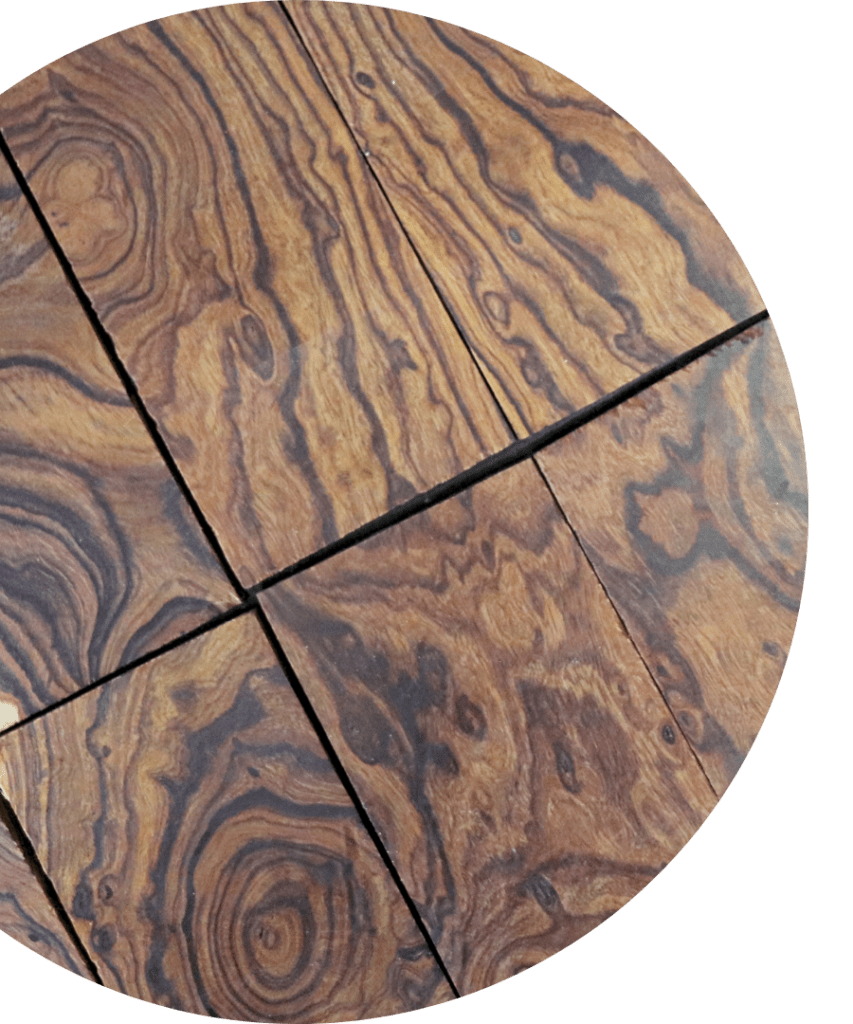
Ironwood
Arizona Desert Ironwood is one of the densest woods in existence, with the highest hardness. The tree it comes from acquires this strength by growing slowly in extreme conditions.
It is greatly appreciated for its vivid, almost violet browns, and its easily recognisable, sublime contrasting patterns and grain.
It is used in joinery and in making craft objects, including knife handles.
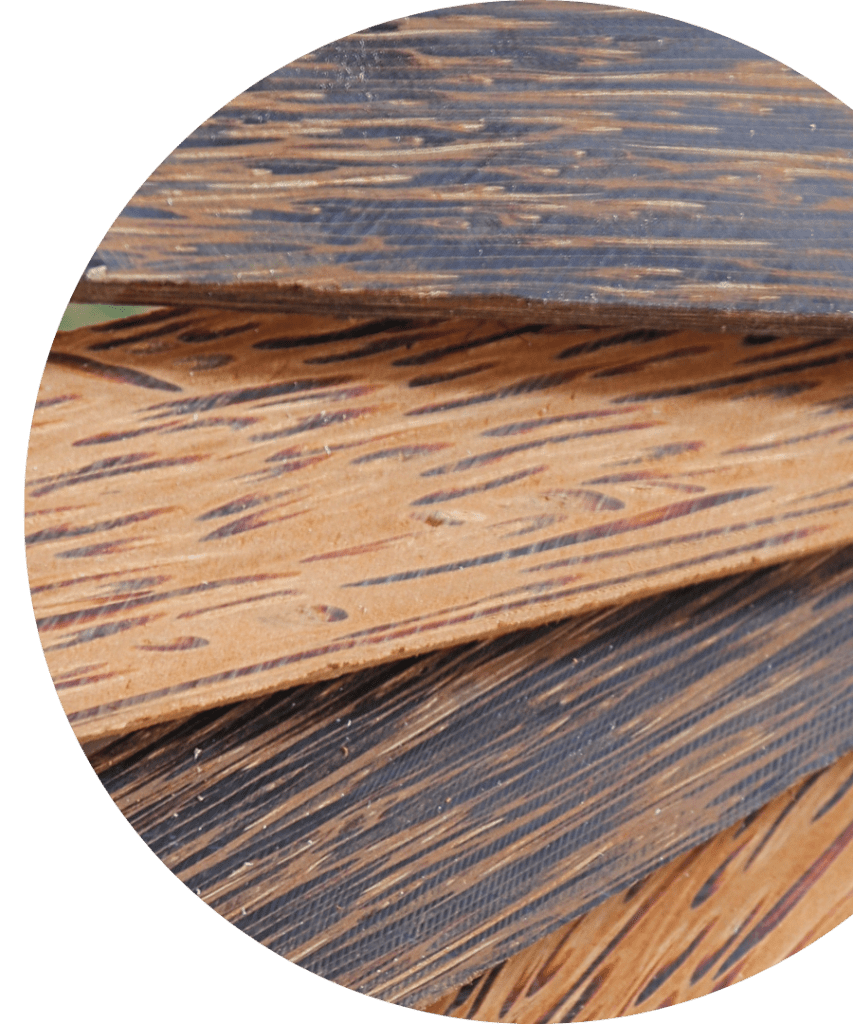
Palmier – Rouge & Noir
Palm wood is a light, durable and flexible material, unusual in that it is made of interlocking fibres.
The palm is not really a tree but a tree-like plant that never thickens as it ages.
Its fibres create sublime, fine, contrasting patterns in the wood, ranging from light brown to dark brown or even black, with red tones along the way.
It is used to make furniture, jewellery, knives and various other small everyday or decorative objects.
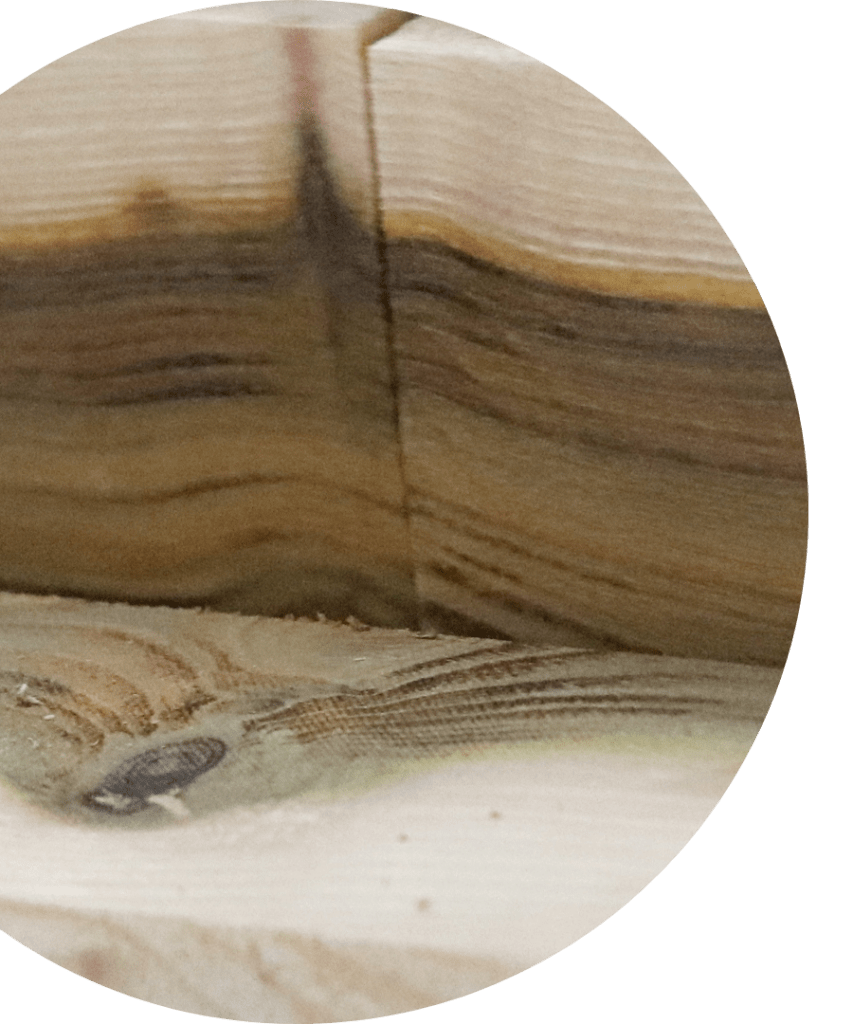
Pistachio
Pistachio is a wood of medium density, stable, hard and resistant.
It has an attractive and elegant natural look thanks to its colours, which can vary from light brown to light green to dark brown, with a distinctive grain.
Its appearance, fine texture and resistance to cracking and moisture make it a wood often used for carving.
We also find it in cabinetmaking, knifemaking, jewellery making and for making small objects.
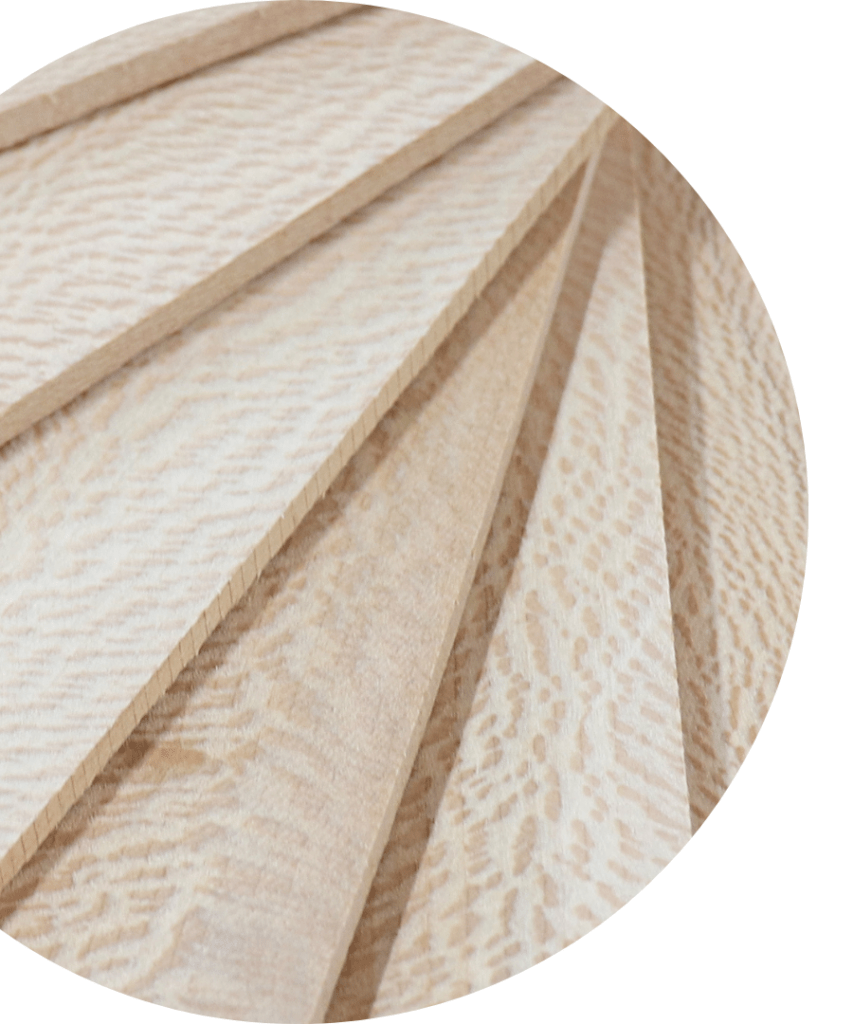
Plane
Plane is a tree whose wood is fairly hard and firm, very easy to work. It is a precious wood of high quality.
Light brown in colour, its surface is decorated with small, slightly darker markings, giving it a very beautiful, unique speckled look.
It is a tree widely planted for ornament and along streets because it copes well with urban conditions. Its wood is used to make furniture, toys and other
petits objets.
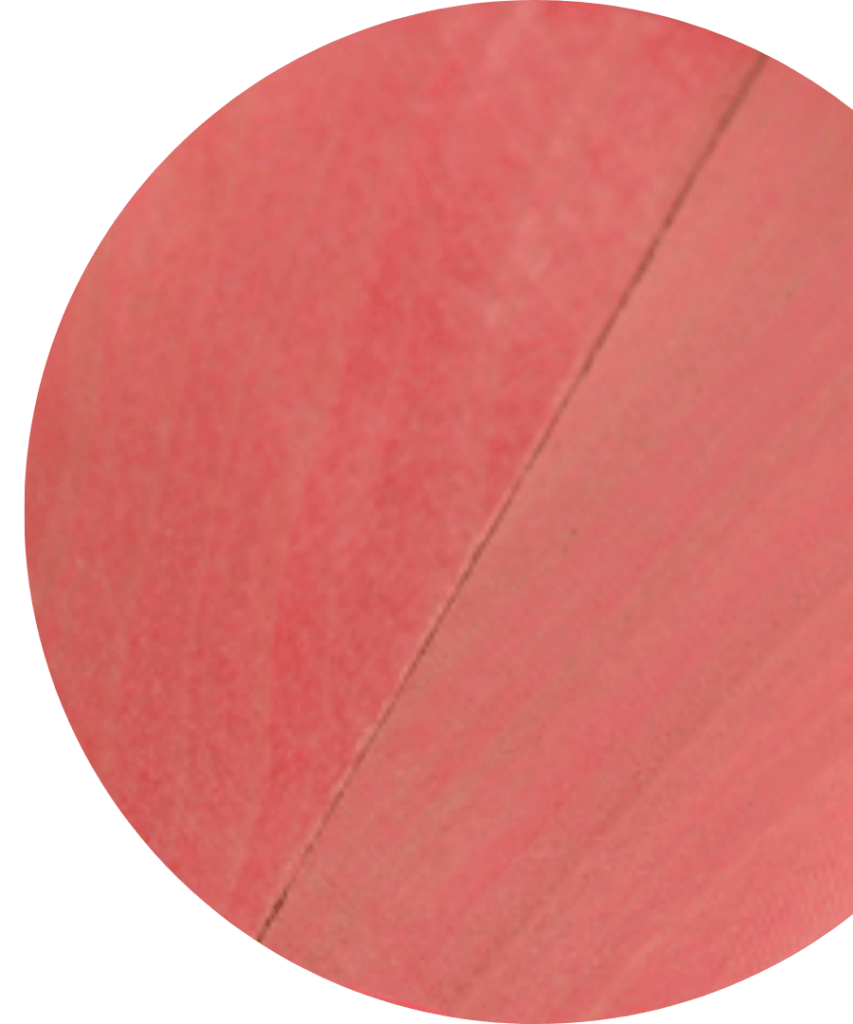
Redheart
Redheart (red heart) is a very durable wood thanks to its high density and weight, coming from Central or South America.
It is recognisable by its vivid colours ranging from
red-brown to magnificent orange-pinks. Its colours may fade over time because of the sun.
It is a wood with a unique look that is easy and pleasant to work, so it is often found in joinery, cabinetmaking, craft objects and decorative veneers.
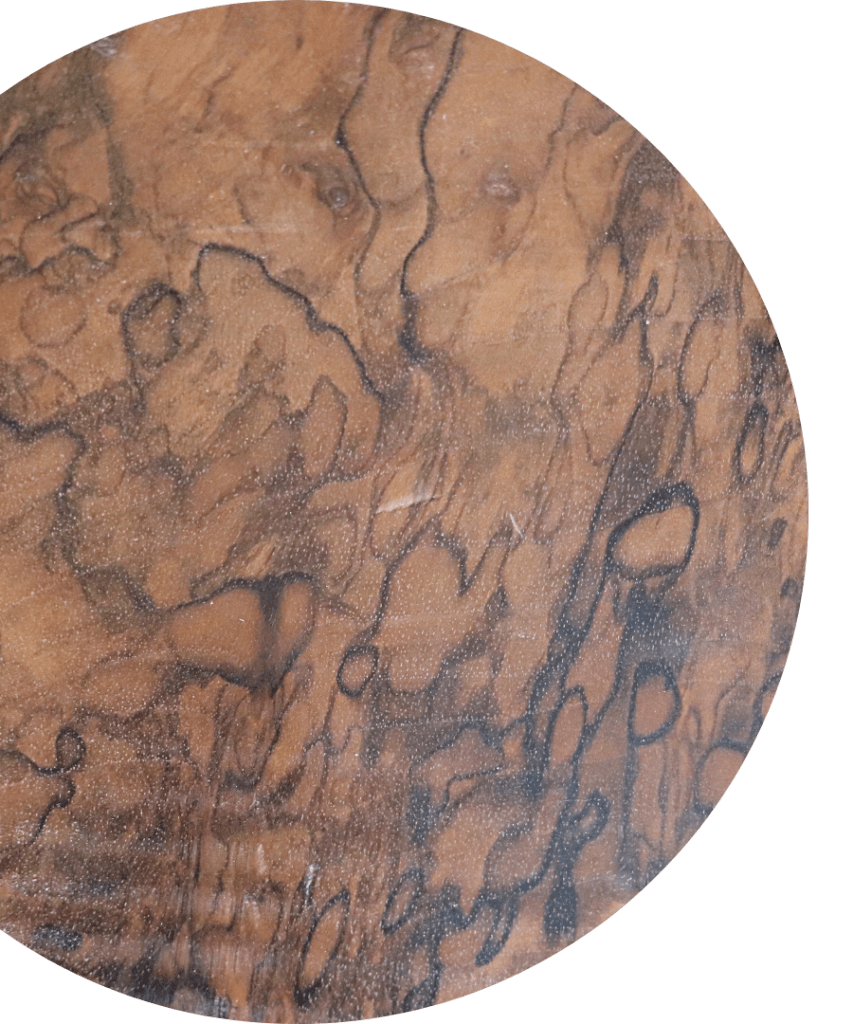
Walnut burl
Walnut burl is defined as a wood with tangled fibres, found at the base of the tree, near the roots.
It is a wood often used for its decorative, contrasting grain and its golden to dark brown reflections.
Very dense, walnut wood is sturdy and stable, making it perfect for fine work with precise finishes.
Because of this, it is a very popular wood in cabinetmaking, joinery, sculpture and knifemaking.
Tamarin
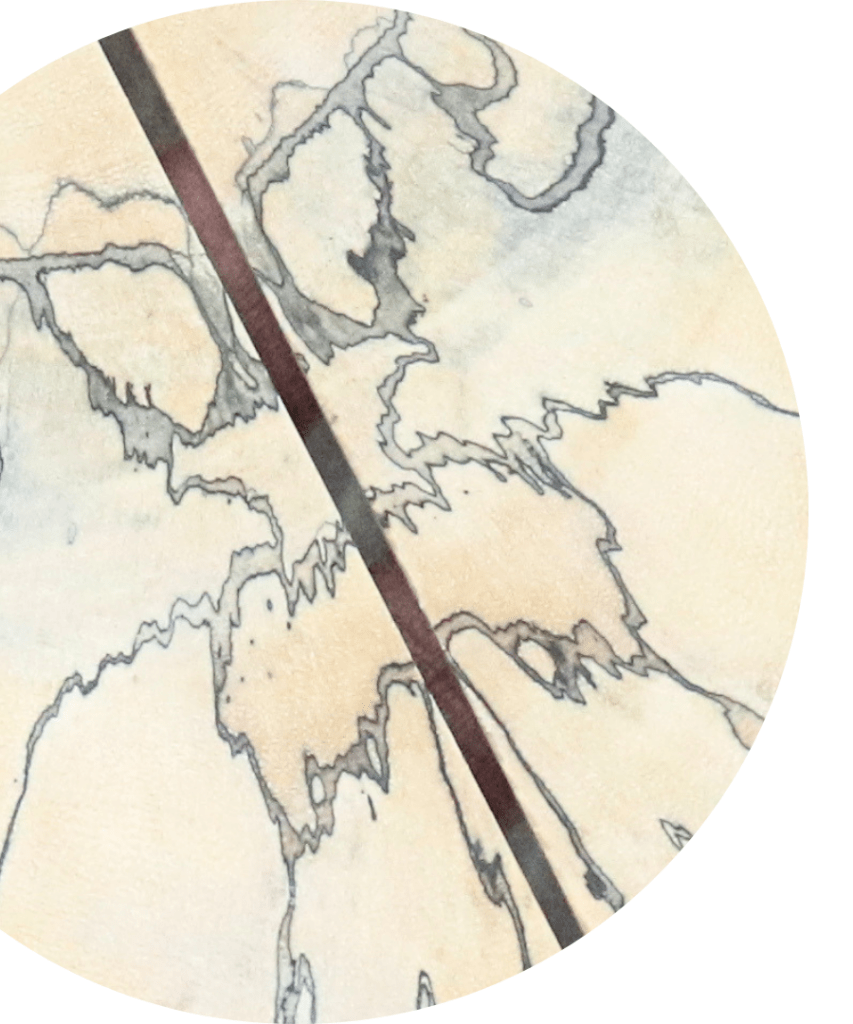
Tamarind is a tropical wood from the warm regions of Africa and Asia. It is heat-marked and stabilised to give it greater strength and resistance without changing its appearance.
It is a wood that is generally creamy brown, marked by very dark, irregular grain, creating sublime
motifs uniques.
It is used in shipbuilding, cabinetmaking, for making objects with fine finishes and for making
shingles.
Thuja wood
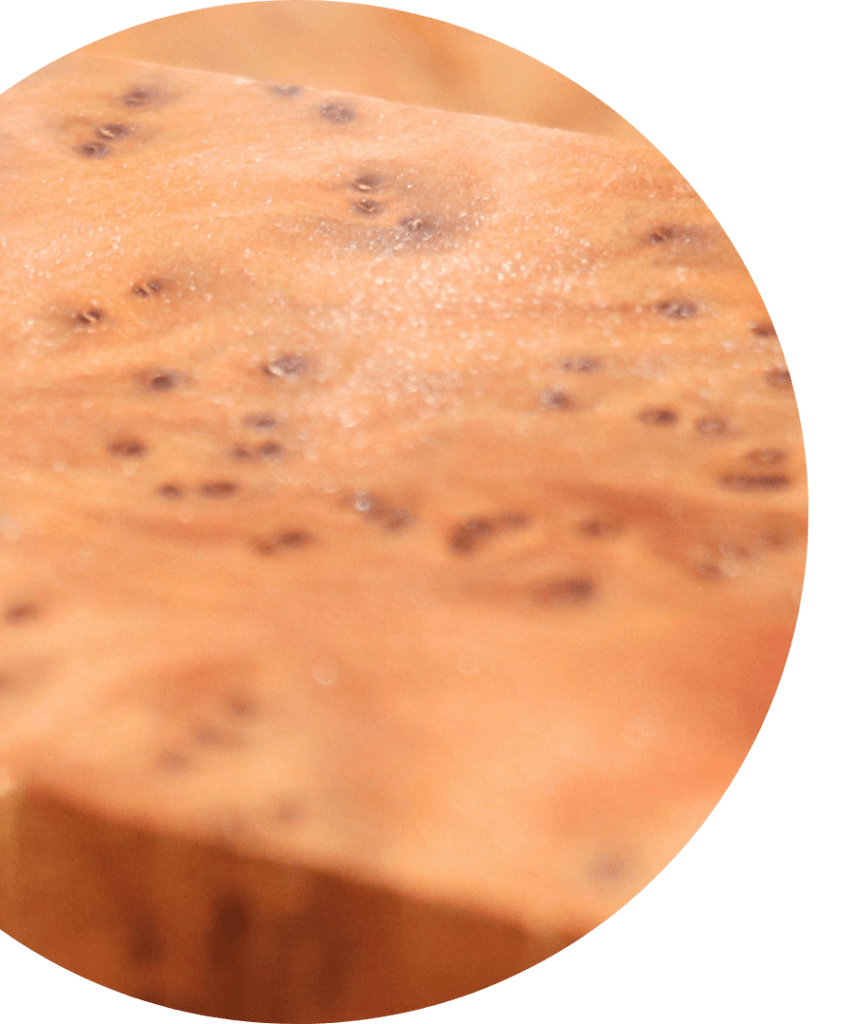
Thuja is a precious wood known for its high durability and its resistance to rot and impact. It comes from a tree nicknamed the “tree of life” in North America.
It is a wood with warm colours, whose burl shows pretty little dark brown spots and a light grain.
This material is used in cabinetmaking, in making precious objects, chests and knives. Thuja is also used as a hedge screen because of its evergreen foliage and for its essential oil.
Linden
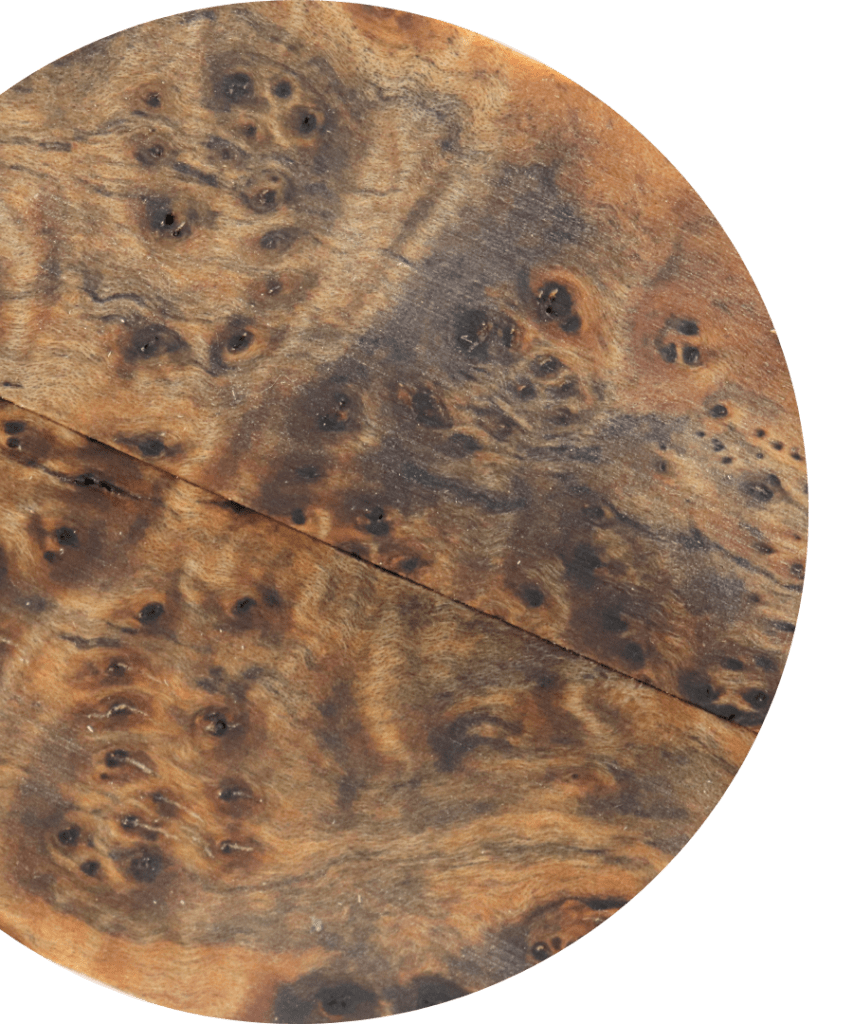
Linden is a European wood, very light and of low density; it is stabilised to be easier to work and more durable.
This wood is generally light, rather creamy brown, but its burl shows darker colours such as
dark browns.
Its lightness and smooth, soft texture make it a wood widely used in making furniture, musical instruments and knife handles.
Zebrano
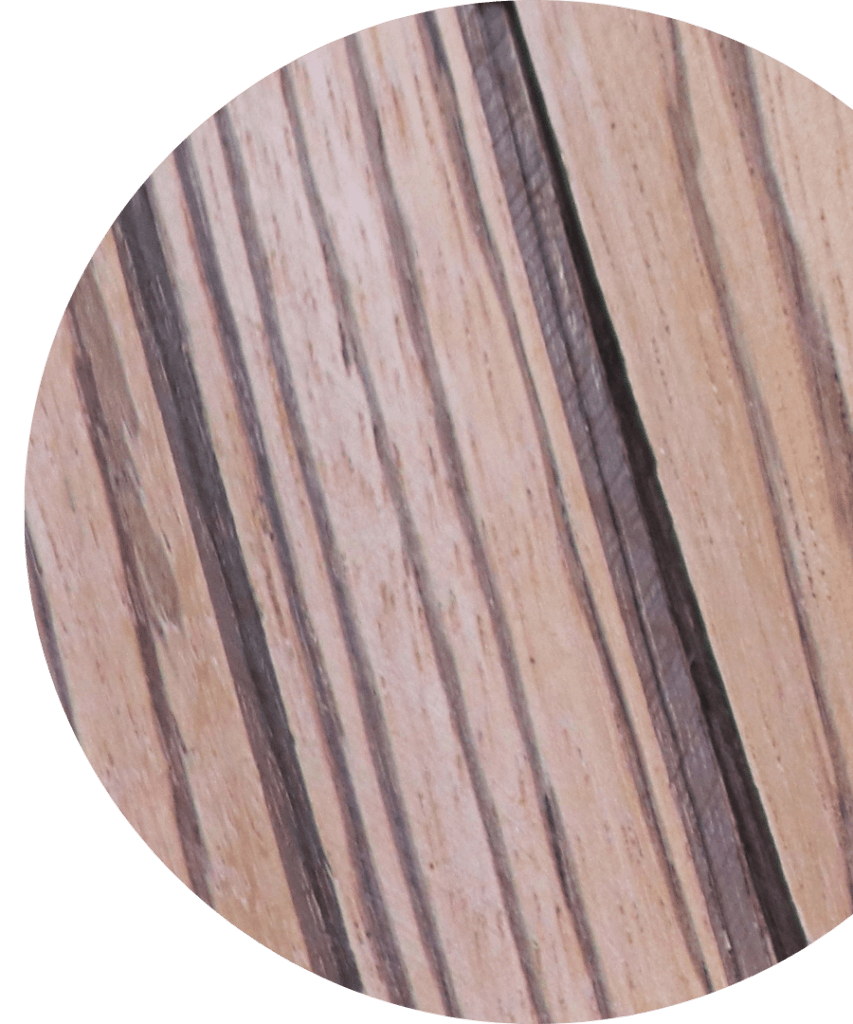
Zebrano, zebrawood or zingana, is an African wood, fairly hard, with an easily recognisable grain.
Indeed, it gives the wood a zebra-striped look, hence its name.
The wood is light yellow-brown in colour with long, darker stripes.
It is a decorative wood, often used as veneer or to make furniture.
It is also used to make tool handles, knife handles, and even guitars.
Our Horns
Ram
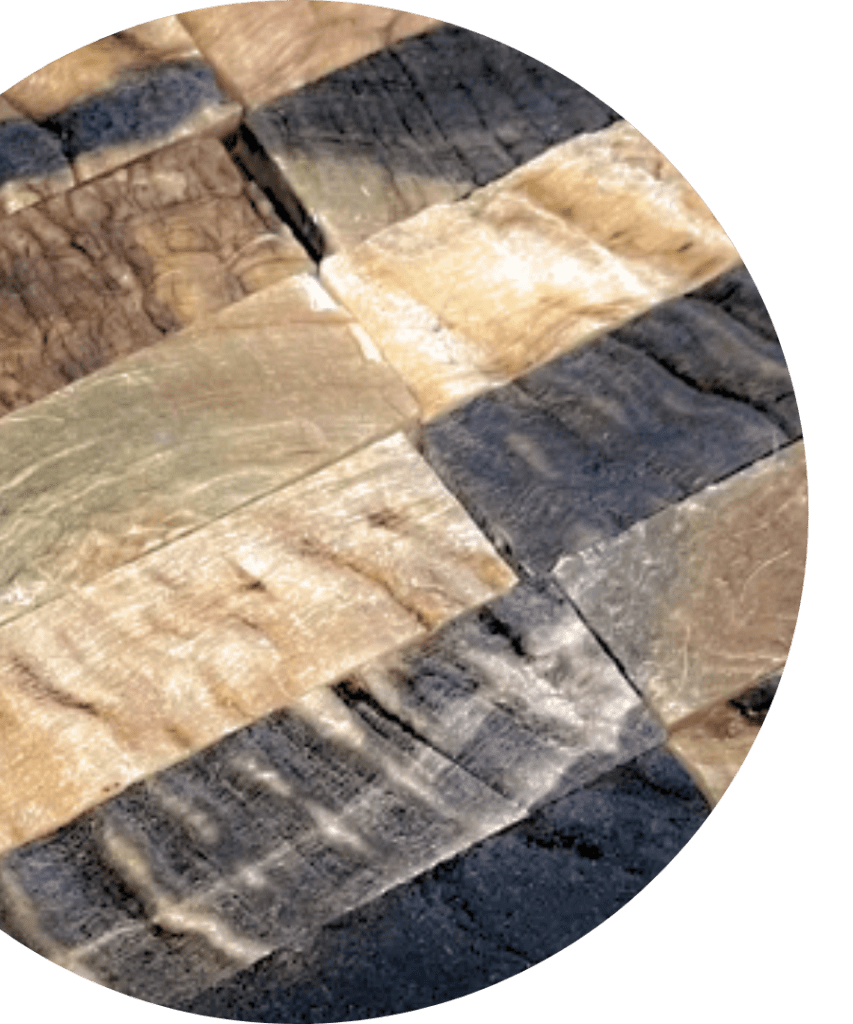
Ram’s horn is considered a precious material.
Made mostly of keratin, it becomes more malleable when heated.
The whole horn can be used: its crust, its centre, its tip; this gives multiple textures, patterns and colour nuances. Thanks to its many appearances, every piece of ram’s horn is unique.
It is a sturdy and durable material, used in knifemaking and in making decorative and artistic pieces or jewellery.
The ram is often depicted as a symbol of the strength of nature.
Buffalo
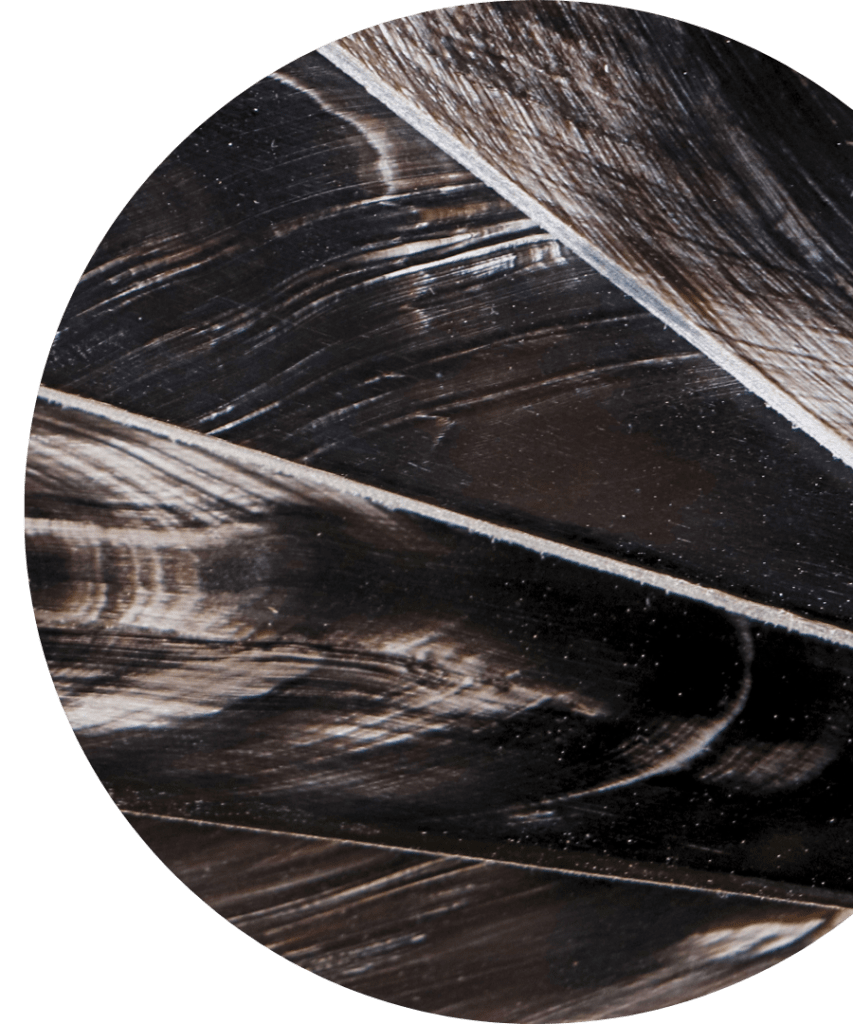
Buffalo horn is a well-known material because it is as sturdy as the animal it comes from, and also for its natural beauty.
Generally a dark grey-brown colour, it can have much lighter patches, which creates sublime contrasts and a marbled effect.
Its great durability makes it a popular material among craftspeople.
It is used to make knife handles and plates for furniture.
The Indian buffalo is also known as the “water buffalo”.
Zebu
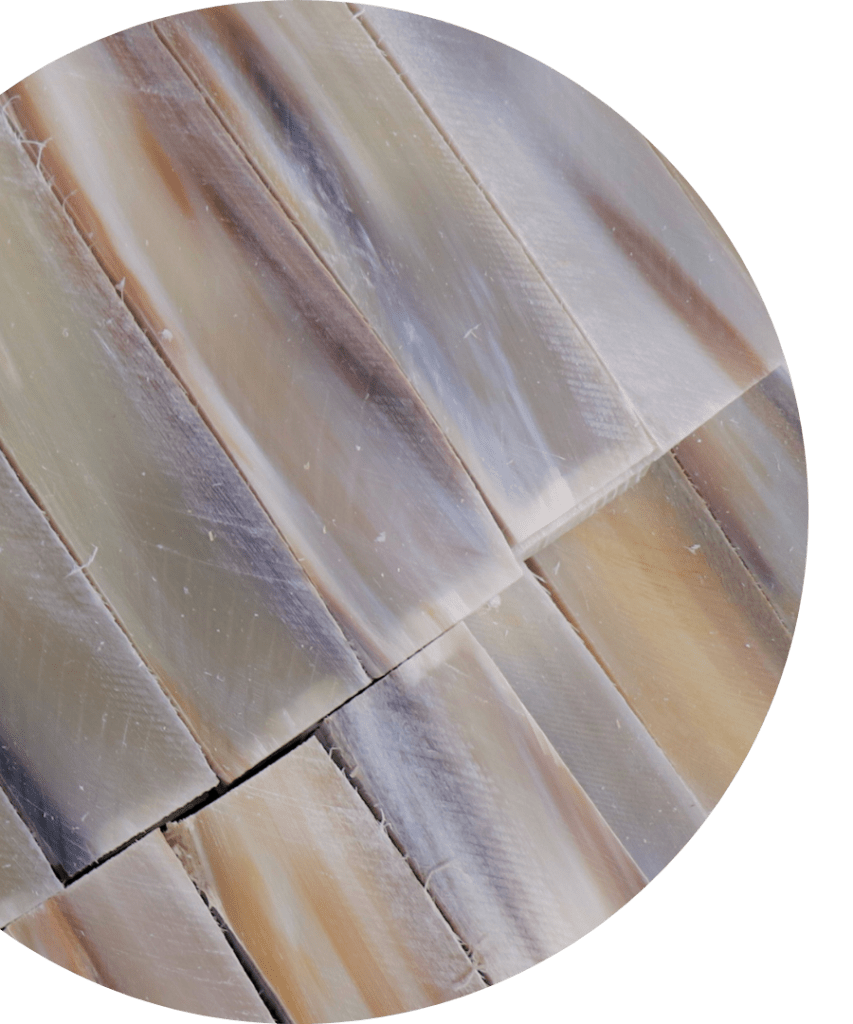
Zebu horn is a sturdy, resistant, durable and versatile material.
It comes in a variety of colours, from creamy white to deep brown, creating unique patterns and a very beautiful aesthetic.
It is a material that is easy to work and shape for craftspeople, but still demands great precision.
It is most often used in knifemaking and in the creation of decorative pieces.
The name zebu comes from the Tibetan “zeba” meaning “hump”, because it has a hump on its back.
Our Other Materials
Deer antler
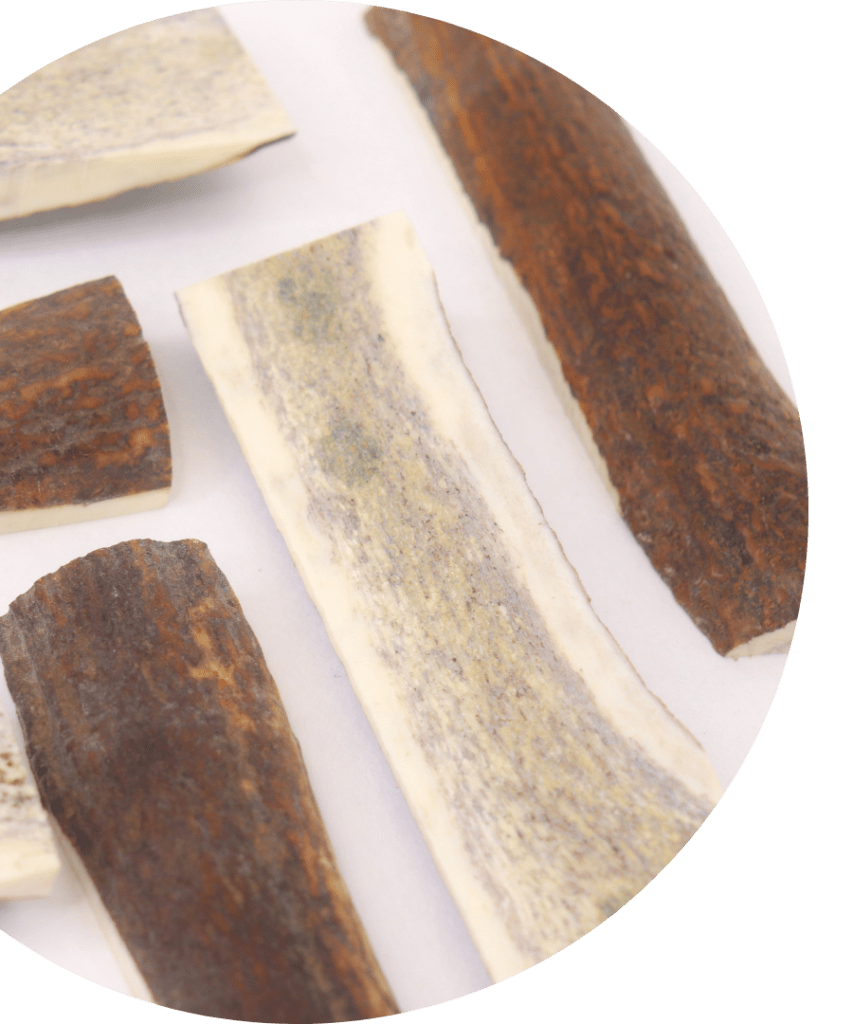
Deer antler is a noble and rustic material, sturdy and light, with fairly variable density.
It comes from the antlers of male deer, which fall off naturally and regrow every year.
The outside of the antler is dark brown and the inside can range from creamy white to light greyish brown.
It is used to make knives, pens, jewellery, small sculptures and art objects.
Mammoth
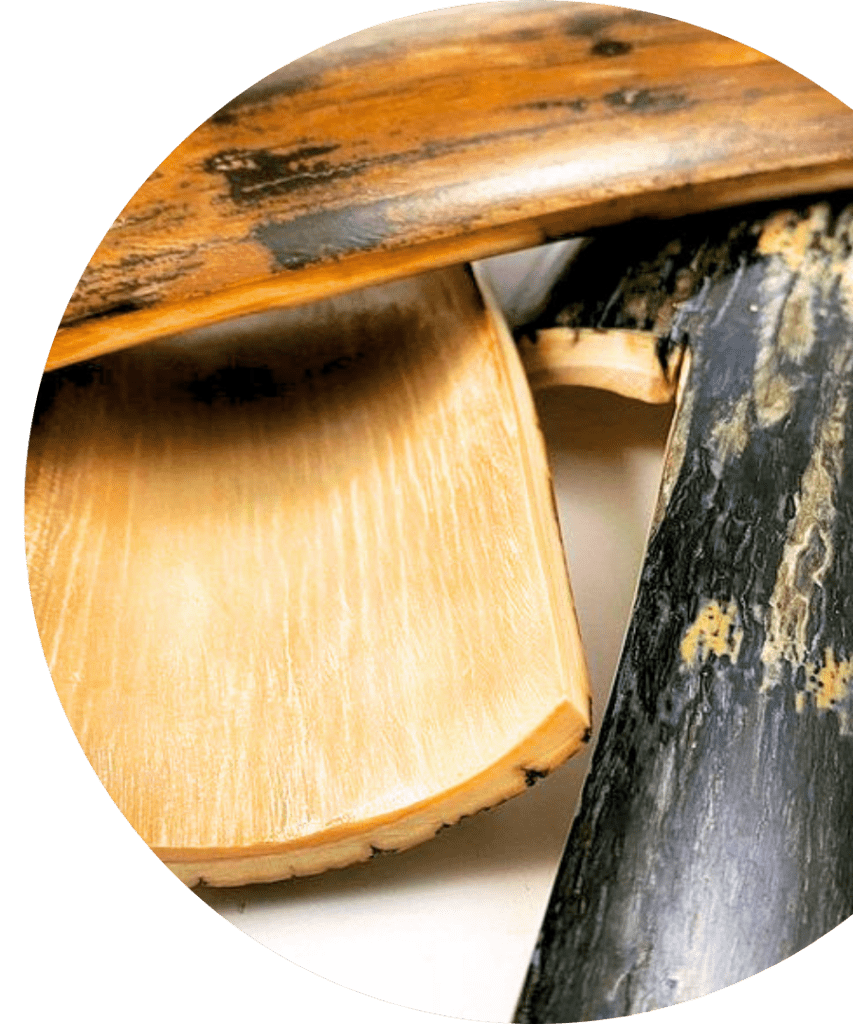
Ivory and mammoth molar are surprising, precious and rare materials, coming from a prehistoric animal, the woolly mammoth.
These are dense materials with unique textures and varied colours, ranging from creamy white to dark brown, sometimes with green or blue tones.
These materials are used in knifemaking, in crafting art objects and jewellery, and are also sought after by some collectors.
Although legal to sell, these materials remain subject to regulations.
Camel bone
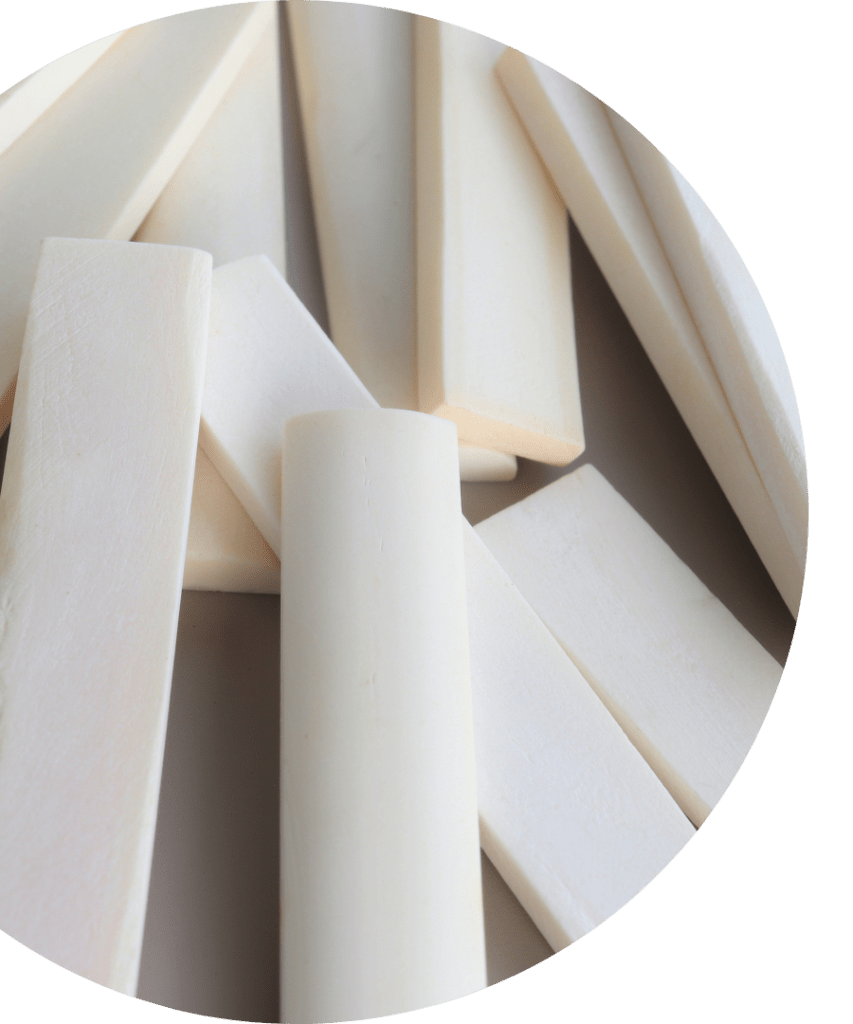
Camel bone is a noble, sturdy and resistant material, appreciated for its texture and its ability to be stabilised and dyed.
In its natural state, camel bone is white, but it can be dyed in many colours: orange, blue, pink, two-tone…
It can be carved and polished, which makes it a perfect material for creating art objects, decorative objects and for knifemaking.
The camel is an animal recognisable by its two humps, unlike the dromedary, which has only one.